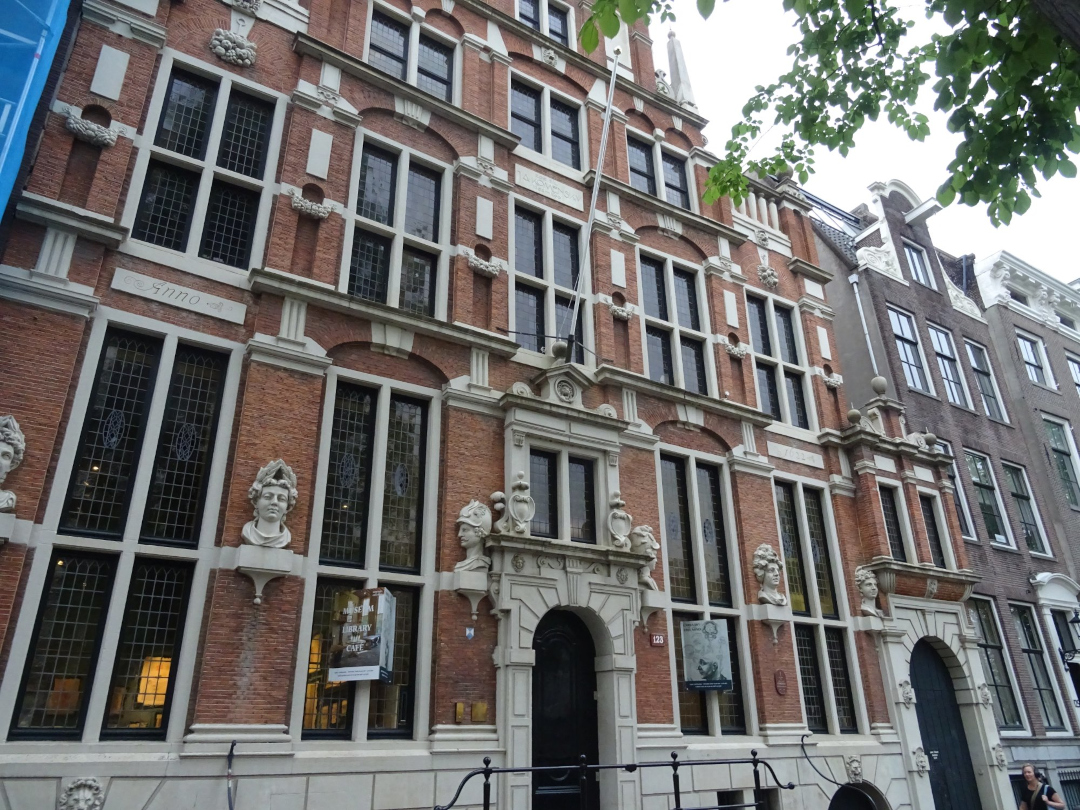
Have you ever wondered who lived behind those grand canal stone faces of the house with the heads in Amsterdam?
Read the fascinating stories of the trailblazing women in the early history of Amsterdam. If you’ve just stepped off a canal boat, you likely craned your neck to see the Huis met de Hoofden (The House with the Heads) at Keizersgracht 123. It’s one of the city’s most iconic landmarks, but its true magic isn’t just in the bricks—it’s in the legacy of the two women who once called it home: Anna in the early 1600s and Rachel Ruysch in the late 1600s.
The Legend of the Brave Housemaid
 As you look up at the six stone heads on the facade of the House with the Heads in Amsterdam, don’t let the tour guides fool you with just the architectural facts. Local lore tells a much darker story.
Legend has it that a housemaid named Anna was once home alone when seven thieves tried to sneak in through a cellar window. Armed with only her wit (and a very sharp kitchen knife), she intercepted them one by one. The stone heads, so the story goes, were placed there to immortalise the bandits she defeated.
While historians will tell you the heads actually represent Roman gods like Minerva and Apollo, I prefer the version where a brave woman defended one of Amsterdam’s most beautiful homes. It’s the perfect example of the ‘Amsterdam Spirit’: bold, a bit rebellious, and always protecting what is dear.”
The Queen of Flowers
Long before Amsterdam was known for its flower markets, Rachel Ruysch was capturing nature with a precision that defied her time. Born in the late 17th century, Rachel was a prodigy. While most women of her era were barred from professional circles, Rachel became the first female member of the Pictura society in The Hague and served as a court painter.
She grew up in this very house with the Heads in Amsterdam, surrounded by the botanical and anatomical wonders collected by her father, Frederik Ruysch. It was here, amidst jars of preserved butterflies and rare plants, that she developed her “moody,” hyper-realistic style.
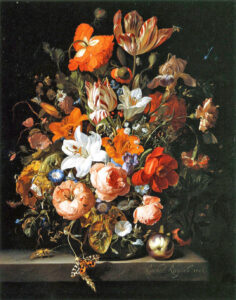
Fun Fact: Rachel Ruysch’s paintings often sold for more than Rembrandt’s during her lifetime. She was a true seventeenth-century powerhouse, balancing an international career while raising ten children. You can find her famous painting at the Rijksmuseum.
A Meeting of Minds: From Rachel’s Flowers to Jung’s Red Book
“The House with the Heads in Amsterdam is not just a monument to the past; it’s a portal to the inner self. While Rachel Ruysch was capturing the soul of nature in her paintings, centuries later, the world-renowned psychiatrist Carl Jung was exploring the nature of the human soul.
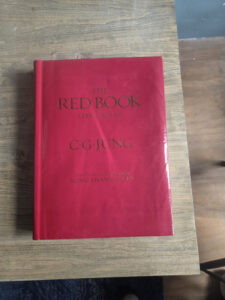
The museum houses a rare facsimile of his famous ‘Red Book’. It is a masterpiece of calligraphy and art that Jung created to document his journey into the unconscious. It feels magic to go through a copy of the famous Red Book. Standing in the library, you realise that whether it’s a 17th-century flower painting or a 20th-century psychological breakthrough, it all started right here behind these canal-side walls.”
Seeking the Holy Grail in the Heart of Amsterdam
But the secrets of the House with the Heads in Amsterdam go even deeper than local legends. Inside the library, you will find ancient books and imagery dedicated to the Holy Grail.
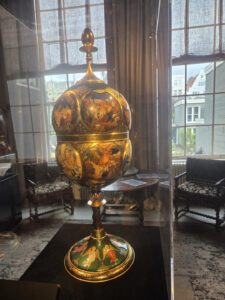
In this house, the Grail isn’t just a golden cup from a movie; it represents the ‘inner light’ and the lifelong search for truth. It is the thread that connects the meticulous botanical studies of Rachel Ruysch, the psychological depth of Carl Jung, and the thousands of hermetic books on the shelves.
Whether you are a history buff, an art lover, or a modern seeker, walking through these halls feels like you are part of that ancient quest. It’s a place where Amsterdam’s merchant past meets a world of myth and mystery.”
From Private Home to the “Embassy of the Free Mind”
Today, you can do what most tourists don´t: you can go inside. The house is now home to the Embassy of the Free Mind, a museum and library dedicated to free thought, philosophy, and hermetic magic.
Walking through the doors feels like stepping into Rachel’s world. The house is one of my favourite gems, where I can pause, read and reflect—a rare luxury in our busy city. The grand rooms, the smell of old books, and the quiet library (the Bibliotheca Philosophica Hermetica) invite you to journey of discovery through an inspiring tradition of free thought that dates back more than two thousand years.
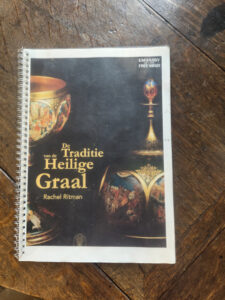
Don’t you just love to see the name Rachel Secret flower garden
on the cover knowing what you know now?
Why you should visit:
• The Architecture: See the stunning 17th-century interior that inspired Dutch masters.
• The Rare Books: Explore texts on alchemy, mysticism, and science that would have fascinated the Ruysch family.
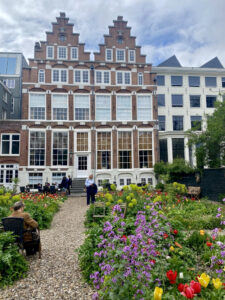
• The Secret Garden: There is a hidden courtyard garden that offers a peaceful escape from the Keizersgracht crowds.
Pro Tip for our Guests: After your visit, walk five minutes toward the Noordermarkt for a coffee and famous apple pie at Winkel 43. As you pass the canals, remember that the “Golden Age” wasn’t just built by merchants—it was painted, petal by petal, by women like Rachel.
Intrigued by the mysteries of the Keizersgracht?
Don’t just read about it—walk the halls where Rachel Ruysch and Carl Jung left their mark. We look forward to welcoming you to Amsterdam. Book your stay at Your Stress free B&B Amsterdam
0 Comments